

Our research strives to identify and test new potential therapies for pancreatic cancer. We take a special interest in how these therapies affect the actual biology of these tumors so we can learn how to best tackle this disease in patients.
At its core, our lab revolves around a preclinical trials infrastructure called the Mouse Hospital. Here, we test new drugs using genetically modified mice diagnosed with pancreatic cancer, randomly enrolling our animal patients on either placebo or treatment arms of our trials—just like clinical trials are run with human patients. Any successful therapies identified in our mice are then moved into the clinical setting, either through establishing a new clinical trial or through collaborations with oncologists from the Pancreas Center of Columbia University.
We don’t stop here, though. We study exactly how all of the drugs from our successful Mouse Hospital trials actually work. Even for those that FAIL to help our animals, we study the mechanisms of resistance to treatment to help us learn more about the human disease. As a recent example, in 2024 using our mice (see KPC tab), we targeted the most common mutation found in pancreatic cancer. Using a preclinical drug from our collaborators at Revolution Medicines, we learned that inhibiting the activity of KRAS helped our mice live almost twice as long after their diagnosis. Tumors shrank. Side effects were minimal.
Now, the clinical version of this compound, called daraxonrasib, is moving rapidly through clinical trials. Early results are very positive: patients are living longer and their tumors are shrinking.
This is the sort of research we love to do—the sort that can discover new ways to improve the lives of pancreatic cancer patients.
Our core research also includes
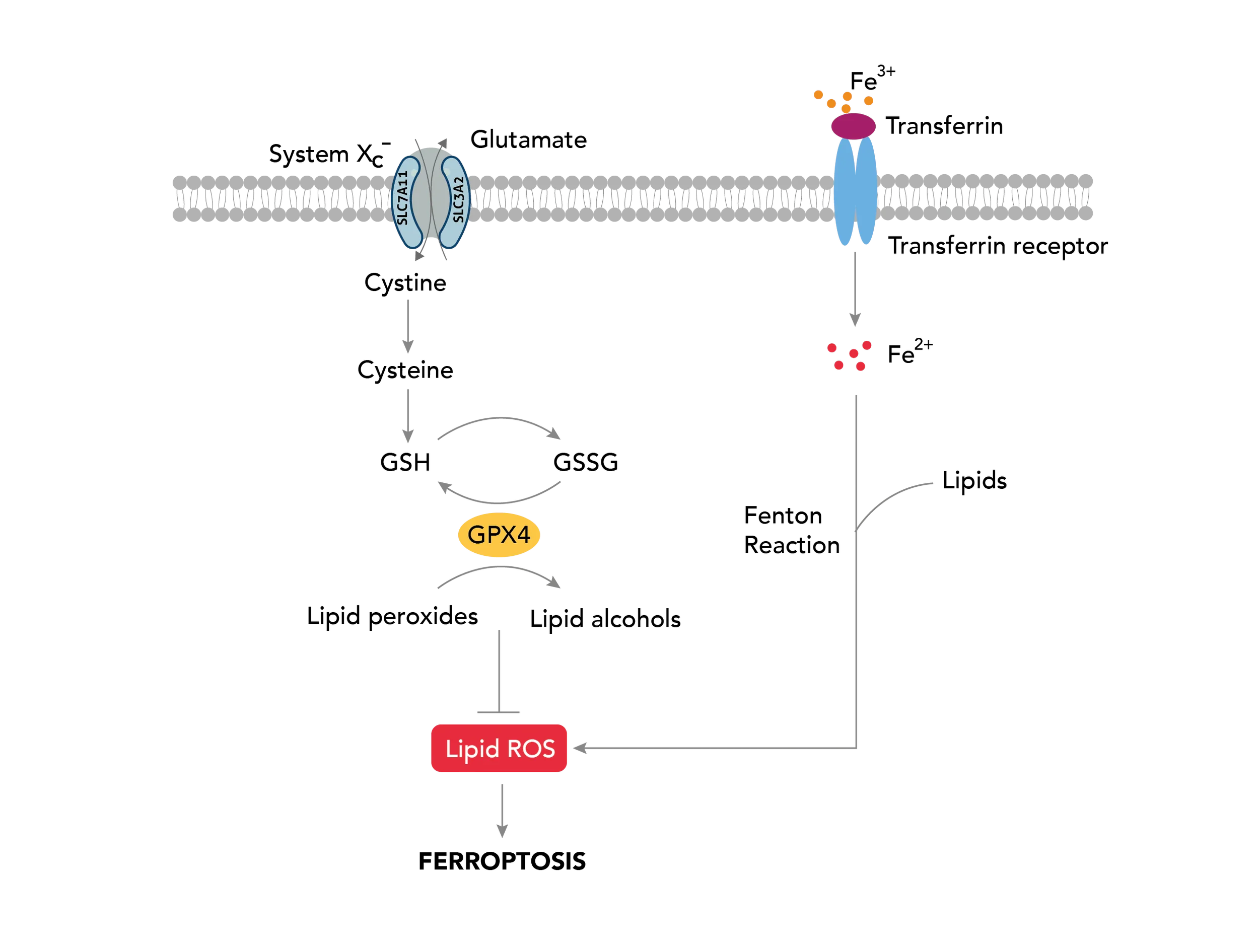
Studying cysteine metabolism and how it facilitates a specific type of cell death, ferroptosis, in pancreatic cancer.
Looking at the role the BRCA gene plays in pancreatic cancer.
Testing the mechanism of action of certain therapeutics and it's ability to target pancreatic cancer.
Taking computational analysis of RNA-seq data of pancreatic tumors and testing the best on target single and combo agents in vivo.
Using bacteria to infiltrate pancreatic cancer cells and deposit therapeutic agents.
Investigating stroma/immune interactions in PDAC

Cysteine metabolism and ferroptosis
Ferroptosis is a form of cell death caused by the accumulation of lipid reactive oxygen species (ROS).
A byproduct of mutant KRAS signaling is the increased production of ROS. In theory, increased ROS will lead to increased ferroptosis, killing cancer cells. However, PDAC cells adapt and remove ROS using metabolic programs that rely on cysteine-derived metabolites. Thus, cysteine and cysteine metabolism is of great interest in our lab. Our lab researches wayways to manipulate cysteine metabolism to induce ferroptosis and cysteine metabolism pathways involved in PDAC.
Role of BRCA2
BRCA2 plays a crucial role in the DNA damage response. BRCA2 deficient cells lack homologous recombination activity and thus accumulate DNA double-strand breaks, resulting in genomic instability and increased risk of malignant transformation. BRCA2 mutations occur in 5-10% of cases of familial PDAC and 3% of cases of sporadic PDAC. In fact, after breast and ovarian cancer, PDAC is reported to be the third most common cancer associated with BRCA2 mutations.
Our team uses KPBC, KrasG12D;p53R172C/D;pdx-Cre,BRCA2+/-; model to research how BRCA2 haploinsufficiency may predispose patients to PDAC and the mechanism behind this.
RAS inhibition
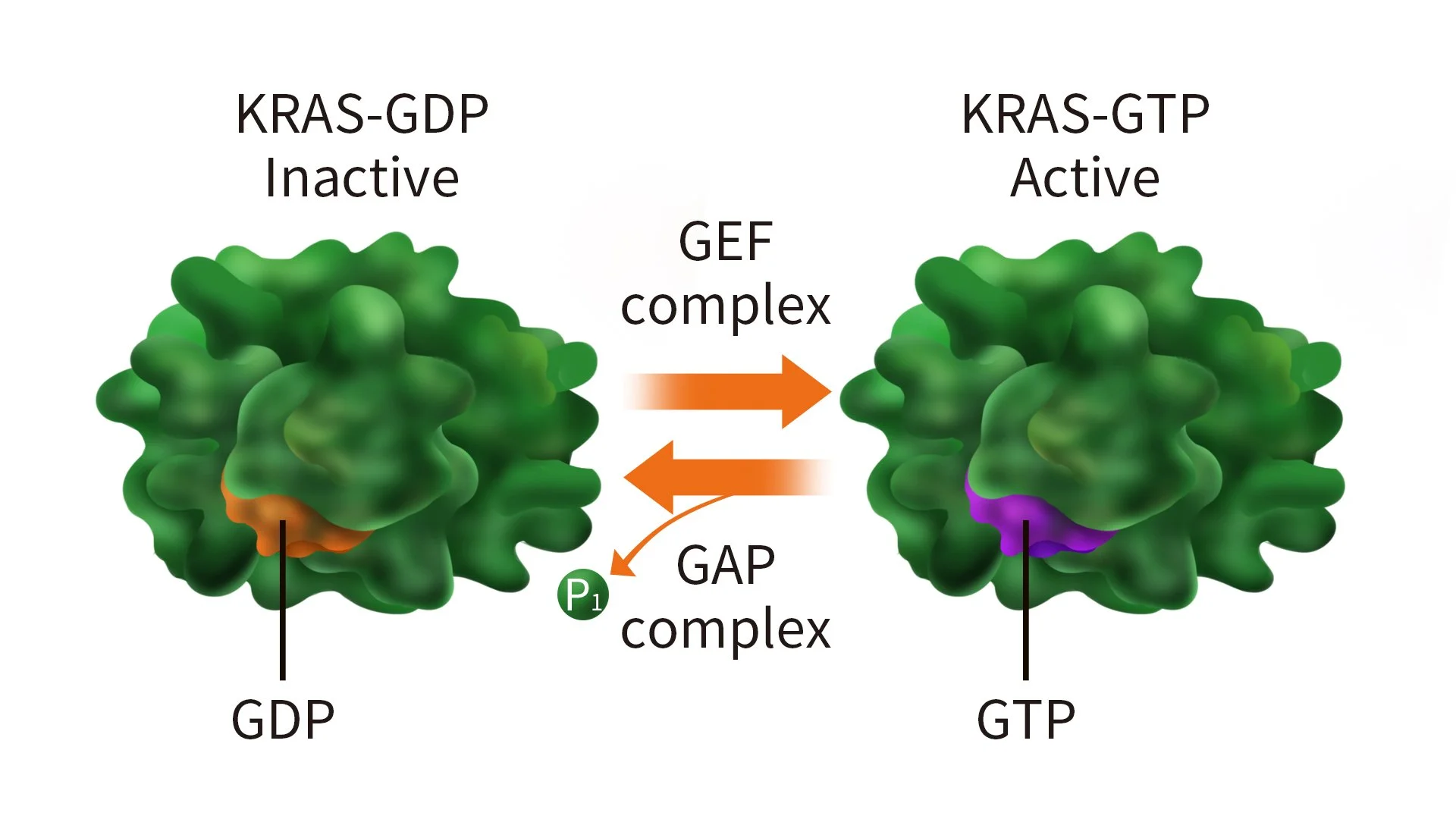
KRAS is a protein that acts as an “on/off” switch. It controls cell division and growth. When mutated, KRAS is in a constant “on” state, promoting uncontrolled cell growth and cancer.
There are various KRAS mutations associated with PDAC; the most common mutations are KRAS G12D, G12R, and G12V. Over 90% of PDACs have KRAS mutations, making KRAS a promising target in PDAC research. This targeted therapy may provide an alternative treatment for patients with resistance to chemotherapy.
KRAS inhibitors are not a completely novel concept. Sotorasib (Lumakras) and Adagrasib (Krazati) are FDA-approved KRAS inhibitors for non-small cell lung cancer (NSCLC) with the KRAS G12C mutation. However, these drugs are not effective for PDAC as they do not target common PDAC KRAS mutants.
Our lab is investigating compound RMC-7977, a highly selective pan-RAS(ON) inhibitor. It targets the active GTP-bound forms of KRAS, HRAS and NRAS, with affinity for both mutant and wild-type variants. Our research aims to determine optimal regimens using pan-RAS(ON) inhibitors for PDAC.
RNA-based precision medicine
Although PDAC is genetically characterized by high penetrance alterations in four genes (kras, p53, cdkn2a, and smad4), none of them can be targeted therapeutically. Indeed, only a small fraction of pancreatic tumors harbor any “targetable” genetic alterations, suggesting that the large majority of patients will not benefit from precision medicine with the current DNA-based paradigm of oncogene dependence.
Recently, the Califano laboratory at Columbia University Irving Medical Center have developed a novel RNA-based precision medicine framework called OncoTreat, which is being translated in collaboration with the Olive lab. Based on an area of systems biology called regulatory network analysis, OncoTreat enables the identification of Master Regulator (MR) proteins that drive the malignancy of individual tumors. Patients are then matched to drugs by screening for agents that impact regulatory activity by opposing the specific MRs active in the patient’s tumor. This concept will be evaluated in a Phase 1b clinical trial at Columbia Presbyterian Hospital.
I propose to perform a co-clinical evaluation of this novel form of precision medicine, using personalized models from each subject, to identify key MRs for each tumor, predict matching drugs, elucidate the mechanism of action and then treat the models with top candidate agents. The most successful treatments will be provided back to the patient as second-line treatment. Finally, samples and data from this study will be used to address biological questions about determinants of sensitivity to treatment, mechanisms of response to therapy, and the impact of standard chemotherapy on MR profiles. Thus, this proposal will bring a comprehensive alternative strategy for precision medicine of PDAC patients.