
Quick Facts
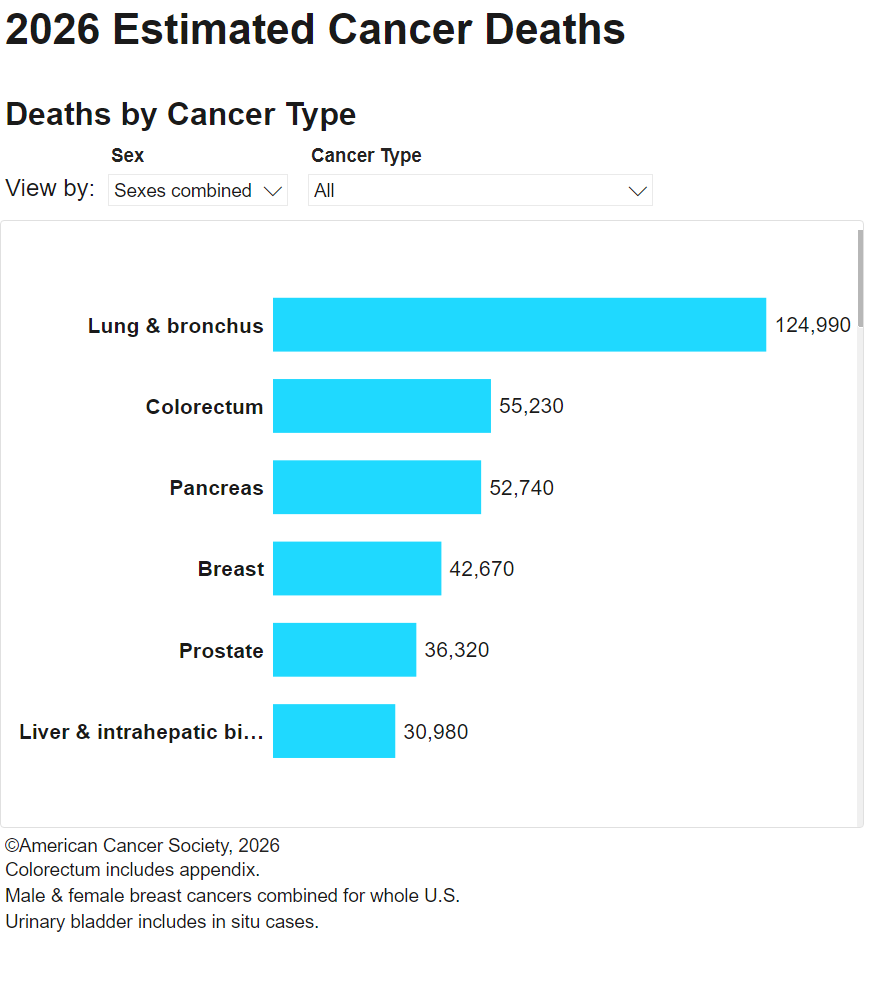
PDAC is the most common malignancy of the pancreas and the 10th most common cancer. However, it is the third leading cause of cancer-related deaths.
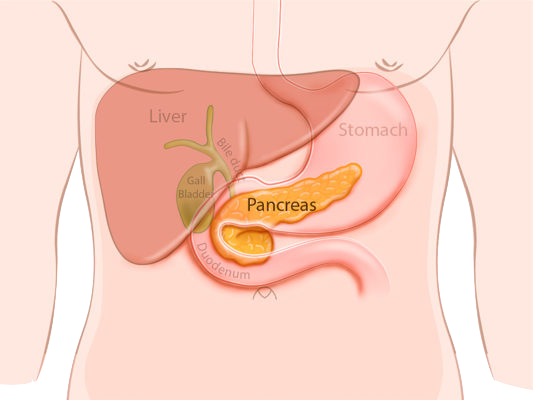
The pancreas is a digestive organ, about six inches long, located in the abdomen. It is is surrounded by the stomach, small intestine, liver, spleen and gallbladder.
The pancreas plays a key role in digestion and blood sugar regulation.
The average five-year survival rate is 12%. This is largely because most people are diagnosed at late stages, when the disease has metastasized. Prognosis is better for resectable tumors; however, only 15-20% of pancreatic tumors are resectable.
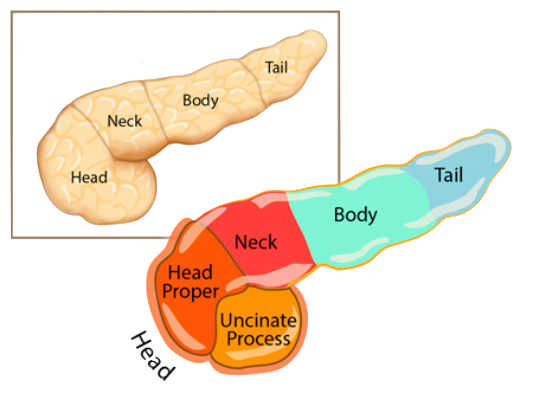
PDA is an epithelial tumor, which is derived from the pancreatic ducts or ductules. Approximately 60-70% of PDAC arise from the head of the pancreas, whereas 20-25% arise from the body/tail.
The standard of care depends on the disease progression.
-
Tumors are most resectable at stage I. However, less than 20% of patients are eligible for surgery. If surgery is not possible, patients are usually recommended to pursue chemotherapy, radiation, or both.
For eligible patients, surgery is the best option for long-term survival. Surgery is usually followed by other treatments to prevent the cancer from returning (adjuvant treatment).
-
Tumors may be resectable or borderline resectable.
Patients with borderline resectable cancer may get treatment before surgery (neoadjuvant therapy). This includes chemotherapy, targeted therapy, and/or radiation therapy.
-
Most tumors are unresectable.
The standard-of-care is chemotherapy and/or radiation therapy. More choices may be available through clinical trials.
-
SOC is chemotherapy, namely gemcitabine. It modestly extends survival by a few weeks, but was primarily approved on the basis of improved quality-of-life indicators.
The only other FDA-approved agent for advanced PDAC is Tarceva which provides an average of 10 days additional benefit when combined with gemcitabine.
More choices may be available through clinical trials.